
WHAT IS SOLAR FENCING?
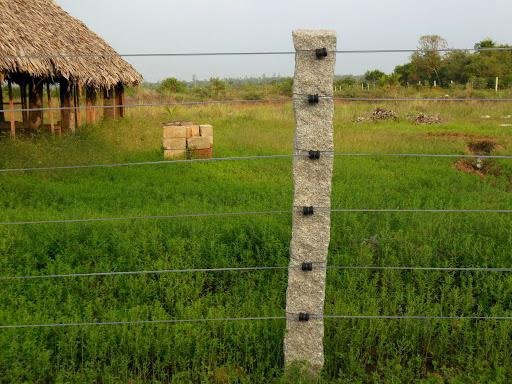
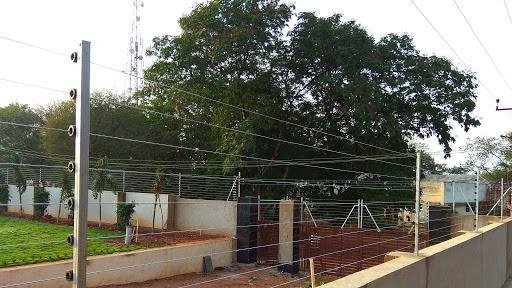
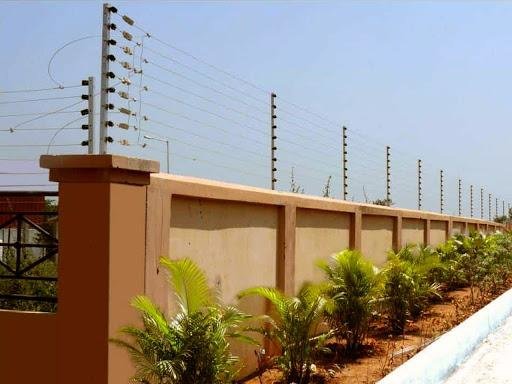
Security has become a crucial subject in today’s time and ensuring the safety of one’s property, crops, colonies, factories, etc. has become everyone’s primary concern. Solar fencing is a modernized and unconventional method which is one of the best options of providing security as it is both effective as well as efficient. Not only does solar fencing guarantee the safety of one’s property, but it also uses renewable solar energy for its functioning. A solar fence works like an electric fence which delivers a brief yet fierce shock when human beings or animals come in contact with the fence. The shock enables a deterrent effect while ensuring that no loss of life is caused.
FEATURES OF A SOLAR FENCE
- Low maintenance cost
- Highly reliable as it functions irrespective of grid failure
- No physical harm caused to human beings or animals
- Cost-effective
- Makes use of renewable solar energy
- Generally, comes with a centralized alarm system
- Conformity with national and international safety standards
Components of a solar fencing system
- Battery
- Charge control unit (CCU)
- Energizer
- Fence voltage alarm (FVAL)
- Photovoltaic module
Working principle of solar fencing system
The working of a solar fencing system starts when the solar module generates direct current (DC) from sunlight which is used to charge the system’s battery. Depending on sunlight hours and capacity, the system’s battery can generally last for as long as 24 hours in a day.
The output of the charged battery reaches the controller or fencer or charger or energizer. When powered, the energizer produces a brief yet sharp voltage. ..
Solar Rooftop Power Plant BOOT/RESCO Model
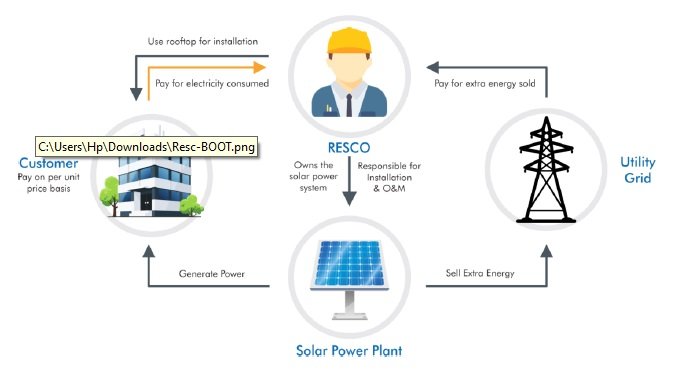
Solar Energy – RESCO or BOOT Model (Build Own Operate Transfer) is about pay as you save from a photovoltaic solar power project. Rusa Energies has expertise in RESCO model business and projects would be governed by a Power Purchase Agreement (PPA) for a period ranging from 7 to 20 years. In the RESCO model, the consumer need not pay any amount upfront, but needs to pay on a per unit price for power. The consumer can sublet his rooftop to a project developer and get monthly rent in the local micro utility model. A growing parity based market in India will bring many new opportunities and business models and Solex has wide experience in this new potential business area.
Rusa Energies sets up solar PV power projects at nil capital investment, utilizes consumers’ rooftops for fixed term period and consumers enjoy cheap, green, reliable, constant & independent power during the PPA (power purchase agreement) tenure.
Advantages
- Zero upfront cost: With PPA, you don’t need to make any upfront investment, because you are not buying a system in the first place. You are only buying energy produced by the system.
- Lower energy cost: The energy price offered in PPA is significantly lower than the grid based energy. That means the more energy you use, the more you save.
- Zero maintenance: We maintain the system for the period of PPA term. You are assured of uninterrupted power supply all the time.
- Zero risk: If the system doesn’t produce energy (may be on a cloudy day), you don’t have to pay. Simple isn’t it !
- Transfer of ownership: You have an option to own the system at the end of PPA term and prolong your energy savings.
Role of RUSA ENERGIES
- We utilize vacant rooftop spaces and set up a solar PV power plant at our own cost.
- Captive consumption: All power generated from the solar plant is fed into the LT panel and is 100% utilized.
- Power Purchase Agreement (PPA): We sign a PPA with the rooftop owner and sell the power on a monthly cycle for a fixed term period.
- Operation & Maintenance: We maintain the entire plant and station our team at site, at our own cost and expense for the entire term.
Financial benefits to ROOFTOP/COMPANY OWNER
- Rooftop owner enjoys cheaper power than the current power tariff & cost including the use of DG sets.
- No worry of continuous power tariff escalation and inflation risk.
- Buy back the project at the end of the PPA tenure at a depreciated value of rupee 1 and enjoy free power for the remaining life of the system which is expected to be 30-35 years.
- Nil capital investment required.
- Comply with the renewable energy purchase obligations and reduce carbon footprint.